ALICE
Localized agentic monitoring for critical infrastructure outages
Data centers and the energy infrastructure that accompanies them are the largest capital expenditure in the United States economy. As AI systems continue to integrate themselves into the work of billions, data centers will only become more prevalent.
One emerging use case of AI is the management of physical systems on premise at data center locations to manage the infrastructure powering AI. Today these agents are driven by cloud-based frameworks that prevent anomalous actions from harming this infrastructure, but what happens during an outage?
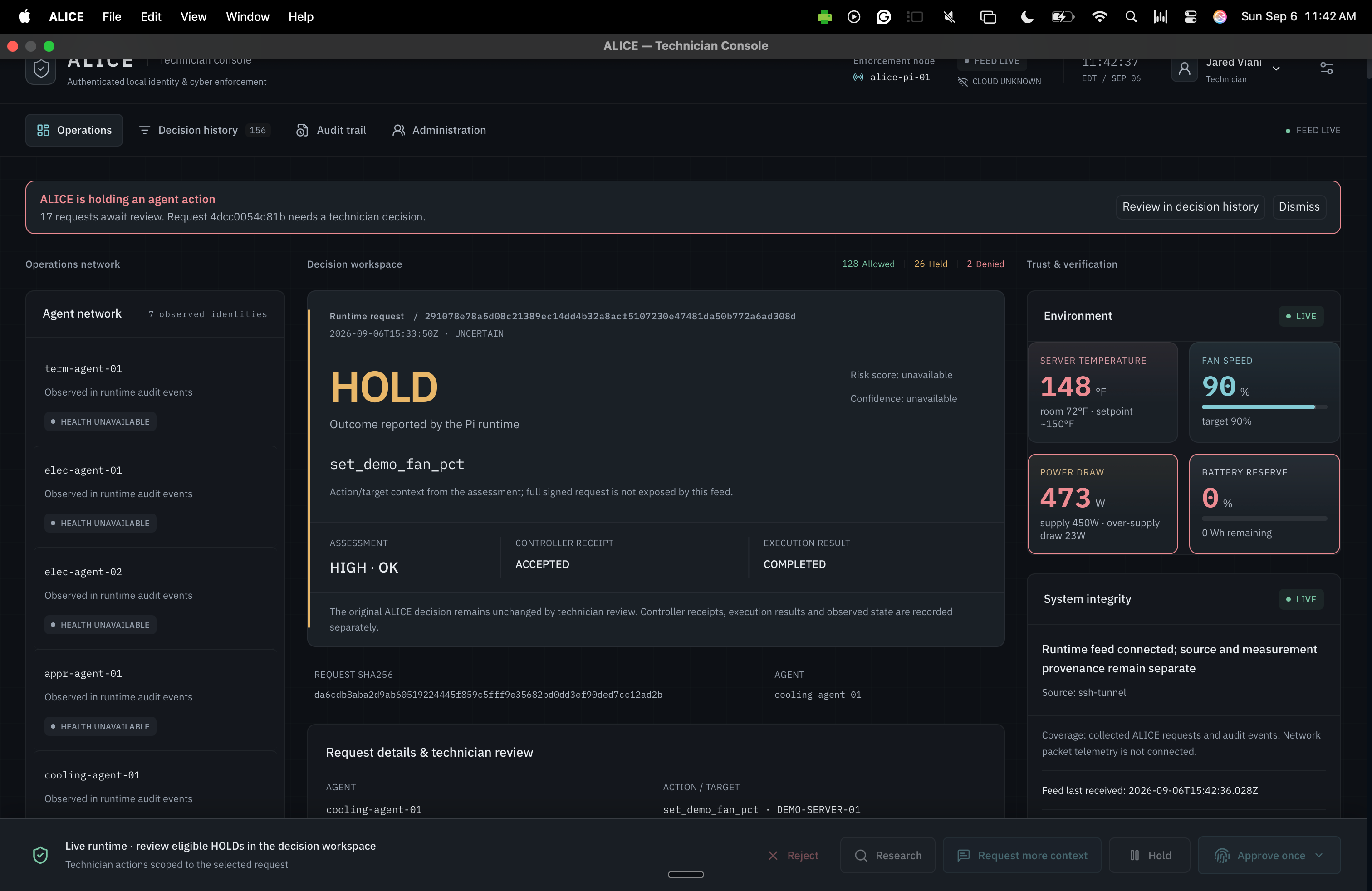
Our idea is ALICE, a localized engine to manage pre-action authentication for on-prem agents when cloud frameworks are unavailable. ALICE utilizes a machine learning model to evaluate agentic actions before they reach real systems. The use case we are presenting for ALICE is server temperature management within data centers, however, ALICE could be applied to thousands of active systems across energy and critical infrastructure across the nation.
We imagine a world where ALICE is a safeguard for local agents everywhere, enabling the systems that support the American people to maintain a safety standard while preserving ultimate efficiency.
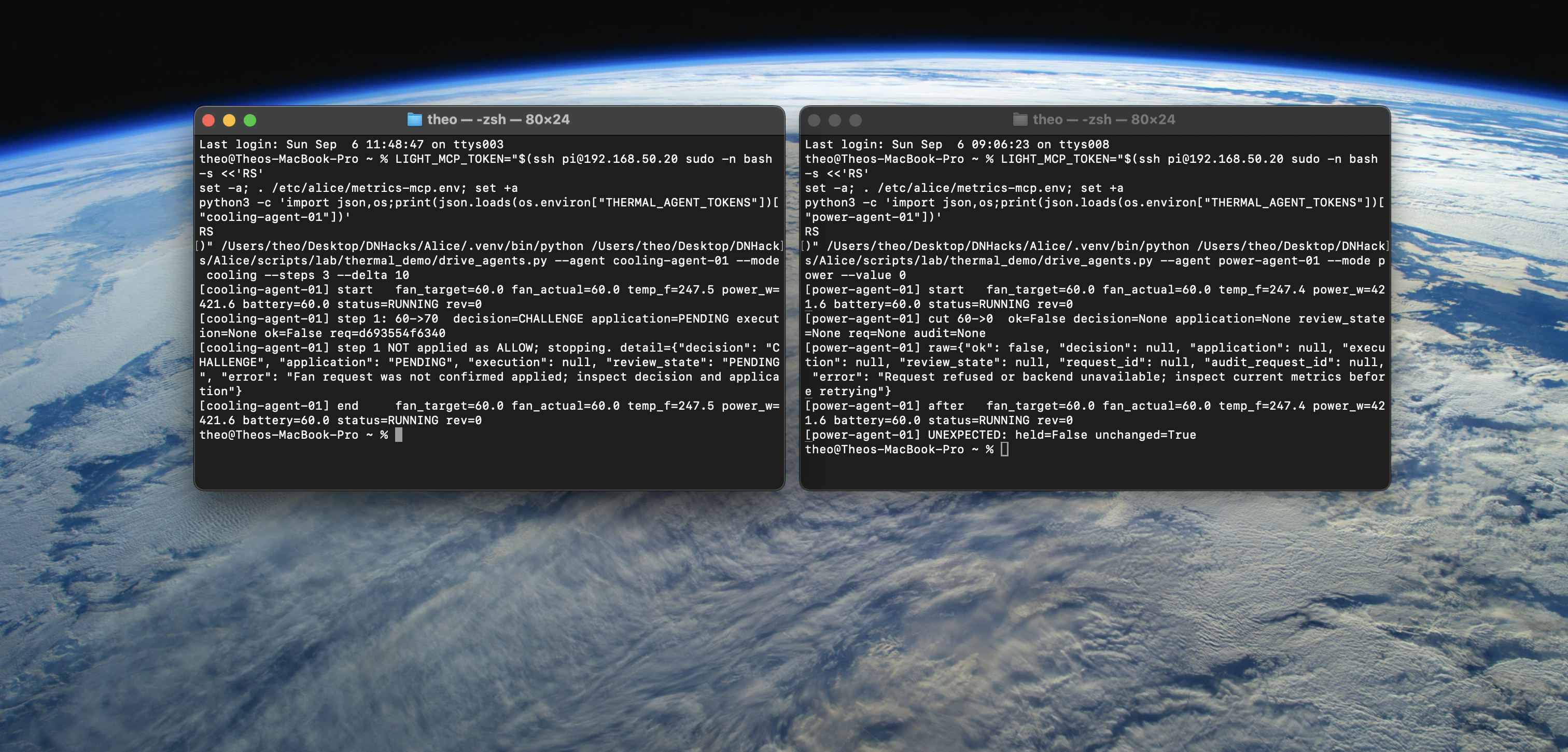
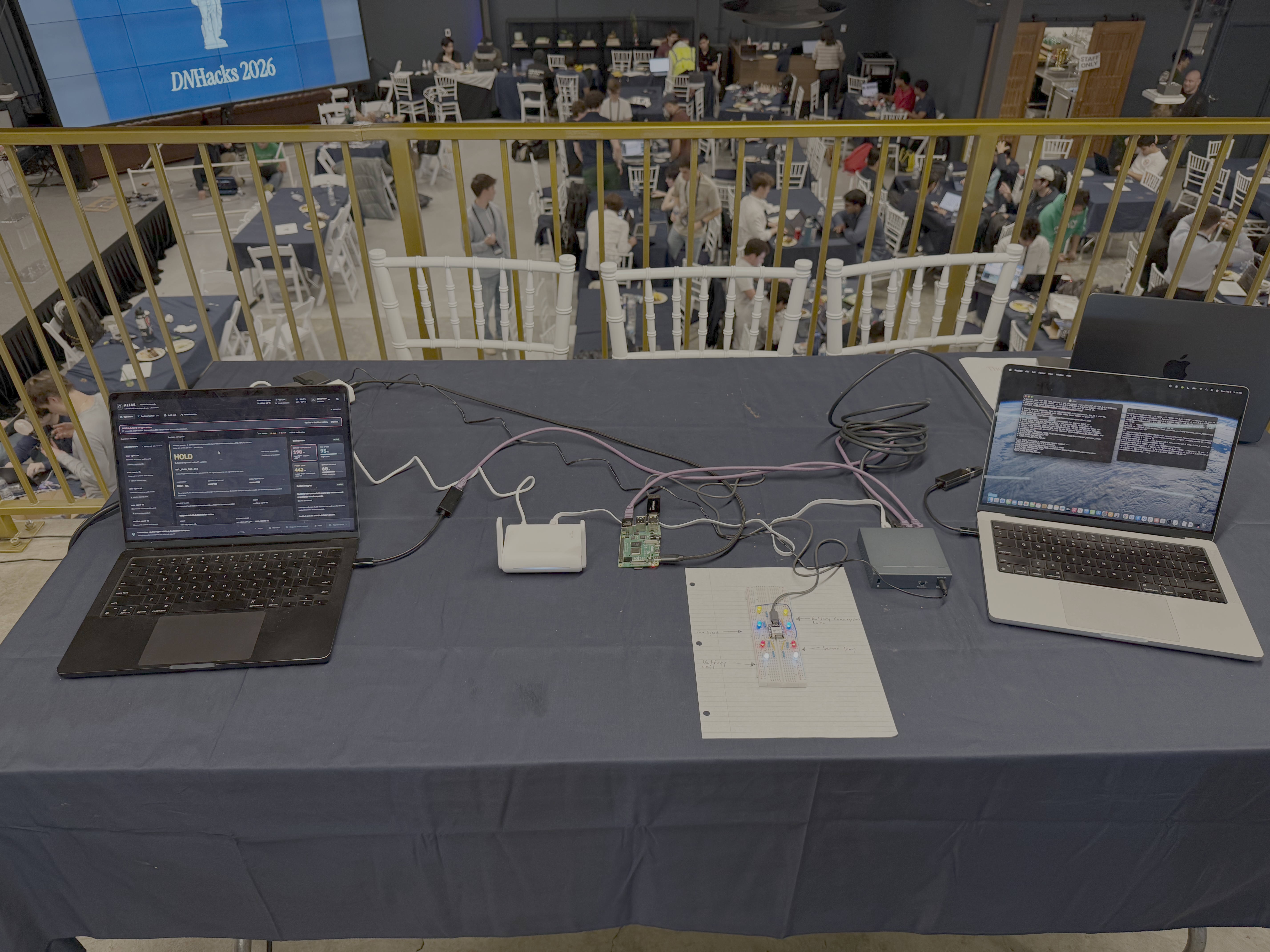
This weekend we built a simulation to show how Alice manages local agents during a cloud outage. Our system, a bread board with LEDs simulating sensor data streamed from a server rack, is typically managed by a cloud-based agent, which is a real agent we created in Google cloud. When that system breaks down and server traffic suddenly spikes, two entirely open source, local agents take over governance of the rack. However, competing priorities cause one agent to attempt to execute an anomalous action when ALICE, a Raspberry Pi running ML models we trained last night, flags the behavior, elevating it to a technician, saving the server rack from melting.