Sub-Millisecond RFML: Neutralizing Fast & Hopping Drone Threats on FPGA
Project Nightingale
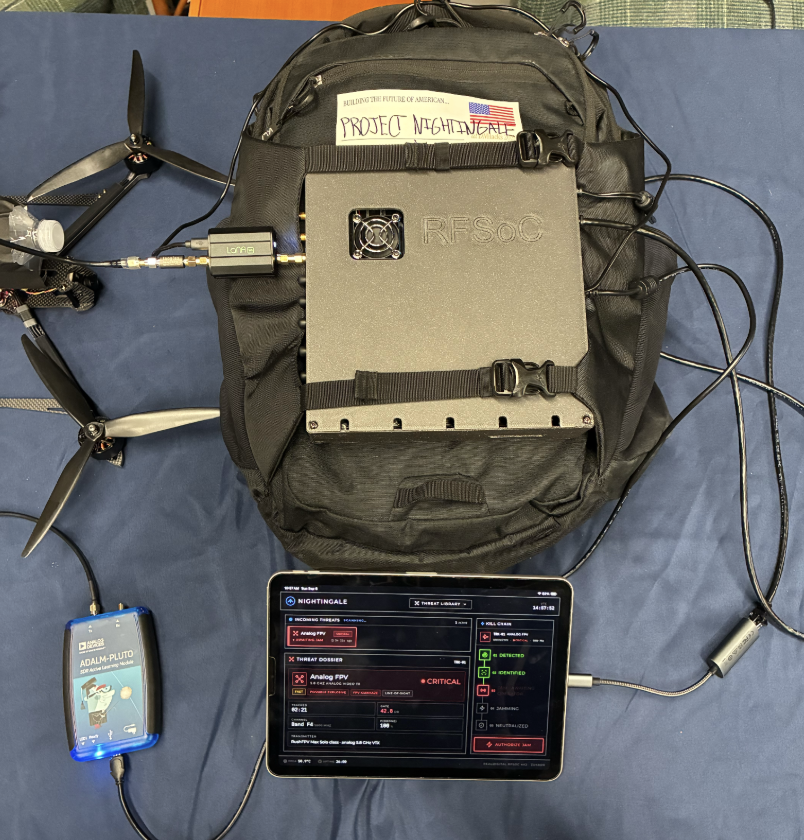
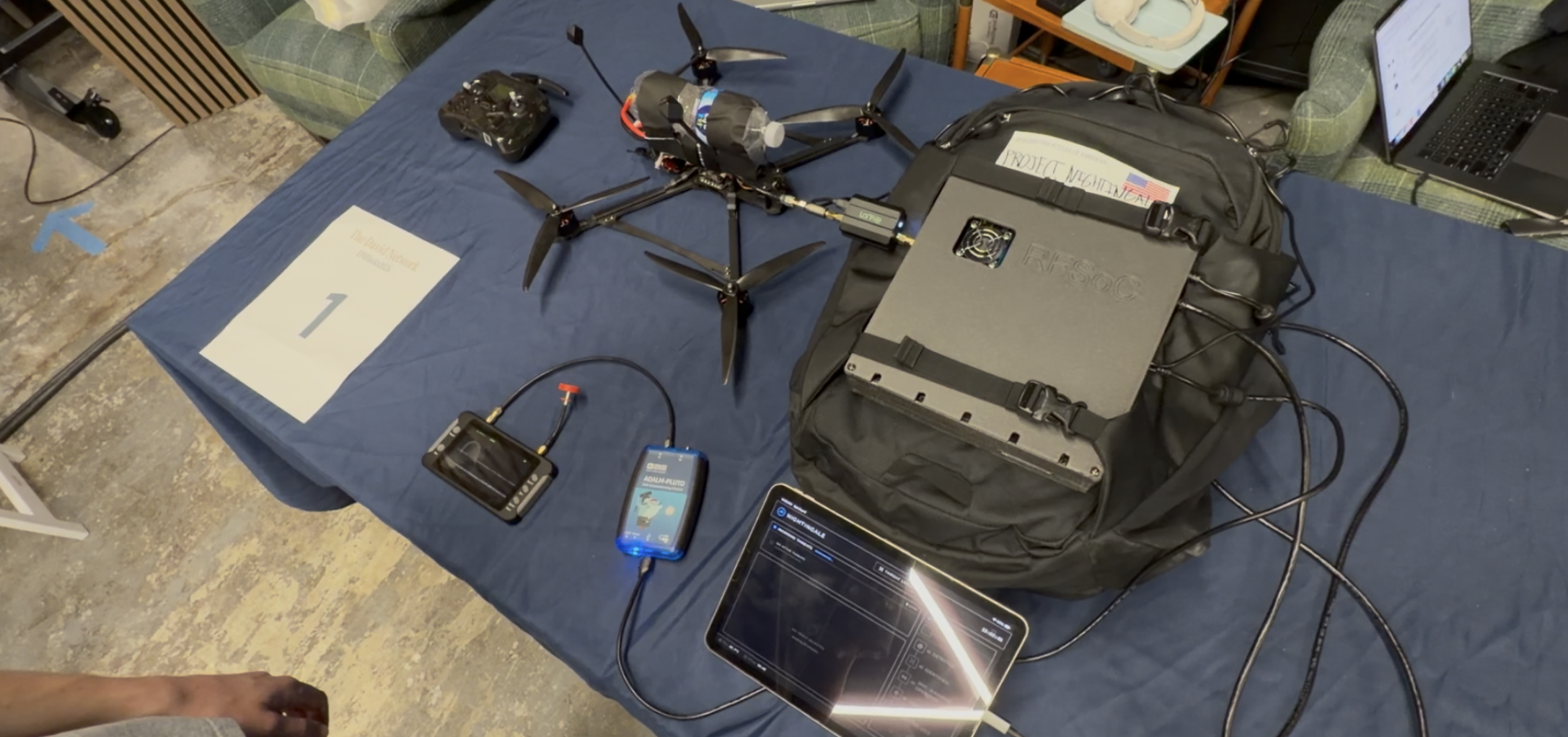
Project Nightingale is a body-worn electronic warfare system that gives individual soldiers personal protection from drones, detecting, classifying, and responding to RF threats entirely on FPGA in under a millisecond — no GPU, and no operating system in the decision path.
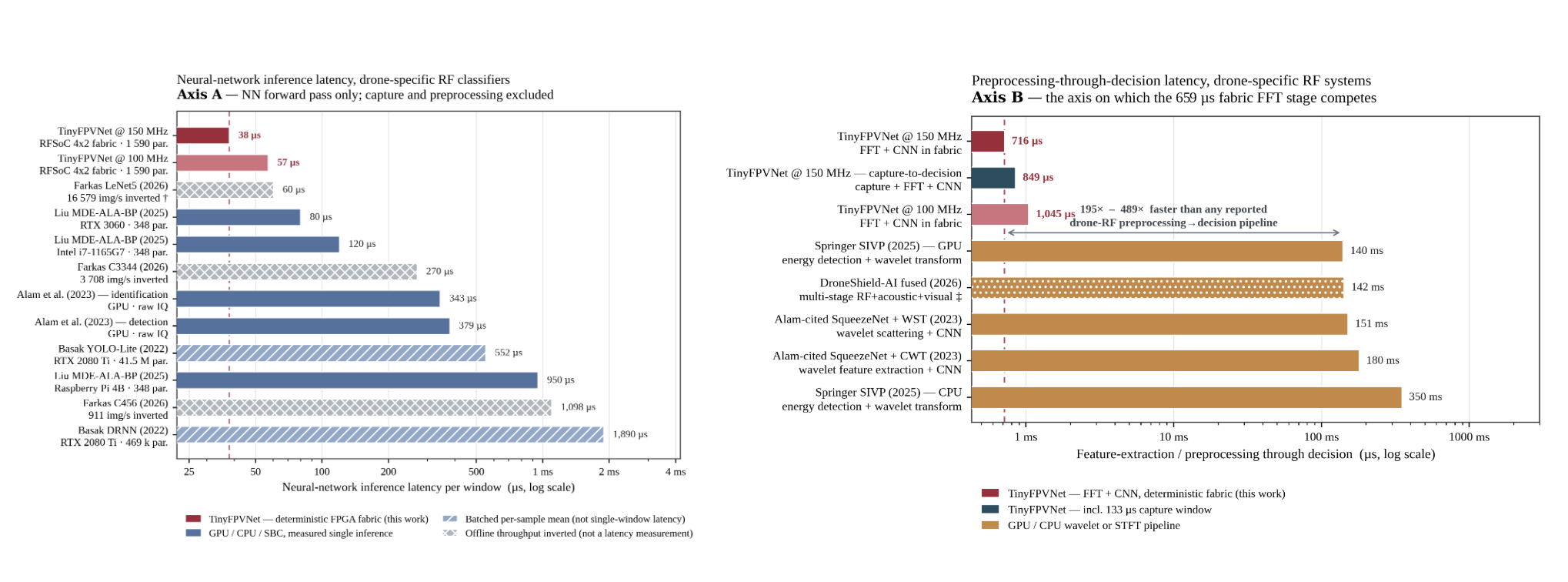
We used hls4ml, the toolchain built for CERN's particle-physics triggers, to compile a quantized 1,590-parameter CNN into streaming RTL, then put both the spectrogram front end and the neural network in programmable logic. The result is a 716 µs sense-to-decision pipeline with cycle-accurate, deterministic timing — state of the art for drone RF by a factor of 195.
That speed buys back reaction distance. A 40 m/s FPV covers roughly 80 meters in the time a sweeping spectrum analyzer revisits its band and a soldier registers an alert — most of the terminal engagement. Nightingale reaches a decision within 3.4 cm of closure, fast enough to cue directional jamming or an effector before visual contact.
The soldiers closest to the threat have the least protection today. Nightingale is built for them.